Eclipse Code Camp – Modeling

Switch to German


Presented by:

1 - 5 March 2010 , Berlin - Germany

While the early days of modeling involved unrealistic expectations and undelivered promises, since then, the technology has matured to realize its true potential as an incredibly productive paradigm when appropriately applied. Eclipse’s pragmatic approach to modeling as an integral aspect of development and a key ingredient of the runtime fully supports modern enterprise systems. This five-days training illustrates these benefits and teaches how best to exploit them in your own projects. You’ll leave with a broad overview of the technological state of the art as well as deep insights into the repertoire of building blocks that are available by learning from leading experts in the Eclipse Modeling scene. You’ll enjoy five exciting and fun filled days with Ed Merks, lead of the Eclipse Modeling Project and the Eclipse Modeling Framework (EMF) subproject, and Eike Stepper, lead of the CDO Model Repository subproject.

The sessions comprise a combination of well-aligned presentations and discussions along with extensive hands-on exercises. You’ll discover just how little tedious manual work remains when modeling is effectively applied. The fact that all this technology is freely and openly available is an added bonus.

At a glance:

  • Very intensive 5 days training from 9:00 am till 18.00 pm, a must for professional Eclipse developers.
  • Live coding, best practices and pitfalls, technical tips & tricks.
  • The best Modeling trainers.
  • Networking events on Monday an Wednesday.
  • Including the official certificate from the Entwickler Akademie.
  • Drinks and snacks will be available during the breaks. In addition, a delicious lunch buffet will be offered to the participants.

Price Specials

  • Company Discount: You save discount if you register with three or more colleagues from one company!

Trainer

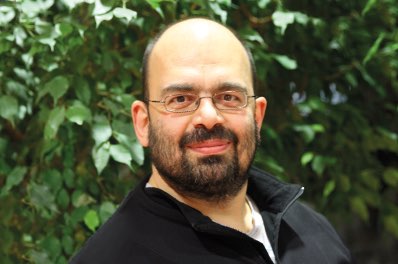
Ed Merks leads the Eclipse Modeling Framework project as well as the top-level Eclipse Modeling project. He is a coauthor of the authoritative book “EMF: Eclipse Modeling Framework” which is published as a second expanded edition. He is an elected member of the Eclipse Foundation Board of Directors and has been recognized by the Eclipse Community Awards as Top Ambassador, Top Committer, and Top Newcomer Evangelist. He spent 16 years at IBM, achieving the level of Senior Technical Staff Member after completing his Ph.D. at Simon Fraser University. He recently founded his own consulting company, Macro Modeling, which works in partnership with itemis AG.

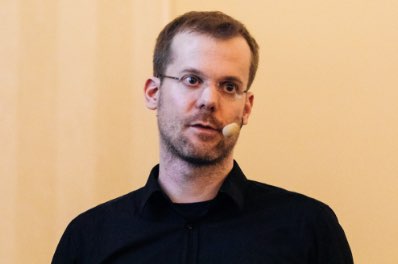
Eike Stepper is a consultant specializing in modeling and OSGi with over 15 years in professional software development. Eike has conducted dozens of successful customer projects since founding his consulting company in 1991. Eike is the initiator and project lead for the CDO Model Repository and the Net4j Signaling Platform at the Eclipse Foundation. Visit Eike's blog at http://thegordian.blogspot.com for more information.


Day 1: Tools and Methodology

Models, that is, abstract structured data, drive much of today’s software development. The Eclipse Modeling Framework (EMF) provides a simple and effective way to describe models as well as an extensive framework for uniformly manipulating them. During the first day, we’ll explore Ecore, EMF’s model for describing models, and learn about its relation to other modeling forms, e.g., XML Schema, Java interfaces, and UML. We’ll look closely at the various tools for manipulating Ecore, including graphical editing of the UML-like notation supported by Ecore Tools. We’ll show the types of things that can be generated from Ecore, including a fully functional editor integrated with the Eclipse IDE. By the end of the day, you’ll be comfortable with the rich set of tools and techniques available for working with your models as well as the artifacts generated from them.

top

Day 2: Core APIs

EMF doesn’t just provide a set of tools for generating code from your models, it also provides a powerful runtime framework for manipulating models as well as instances of those models. During the second day, we’ll explore this framework in detail. We’ll focus on how to exploit the surprising power high level reflection of EObject, EMF’s rich API for manipulating instances in a uniform way. We’ll also dive deeply into EMF’s persistence framework, which is fully based on the principles of Representational State Transfer, and will focus specifically on XML-based persistence, which is uniformly supported for all models. By the end of the day, you’ll understand how to load and save your instance data as an interrelated set of resources.

top

Day 3: Enterprise

Persisting models in files is not always ideal. Often you’ll need multi-user support or transactionality with fined-grained object-level locking, i.e., database-style persistence. During the third day we’ll introduce two additional EMF components: CDO Model Repository and Teneo. While the latter is a two-tiers persistency solution for relational databases with object relational mapping at the client side, CDO involves three tiers and is a more general runtime platform for distributed shared models. CDO has pluggable storage adapters on the server side, including support for Teneo/Hibernate, plain JDBC, and object databases. By the end of the day, you’ll know how to support distribution and how to scale applications to support multi-giga byte models, that is, you’ll see how modeling is ideal for the enterprise.

top

Day 4: Generators and Templates

Now you are an expert in dealing with EMF models. You know how to create models and process their instances. In addition you learned how to employ the EMF generator to generate and customize excellent Java code for your data structures. During the fourth day we’ll explore additional technologies that help you to convert your models into completely different code. Examples for these model to text transformers are the Java Emitter Templates, openArchitectureWare with the template language Xpand and the OMG standards-based Acceleo. With this knowledge you’ll be able to roll-out model driven software development in your own projects as a lightweight and pragmatic alternative to the MDA.

top

Day 5: User Interface

EMF can be used to build many types of applications, including pure runtime server-side applications, but it’s very commonly used to build rich user interfaces. During the final day, we’ll take a closer look at those aspects of the framework that support user interfaces. This part of the framework is divided into two parts: the edit framework, which is platform neutral, and the editor framework, which integrates with the Eclipse IDE or Eclipse Rich Client Platform. We’ll take a brief look at the integration between EMF and the Eclipse platform’s data binding framework as well. Finally we’ll round off the day with a quick overview of the other technologies available in the rapidly growing modeling project ecosystem.

top

Location

NH Berlin Mitte

Leipziger Straße 106-111
10117 Berlin

Tel: (+49)030 203760
Fax: (+49)030 20376600
E-Mail: nhberlinmitte@nh-hotels.com

The NH Berlin-Mitte is located right in the centre of the city, near Brandenburg Gate, Potsdamer Platz and Reichstag in direct neighbourhood to ministerial offices, museums, historical sights and the new friedrichsstrasse shopping area. You are right here at the centre of Berlin´s activities and can enjoy the vibrant life of germany´s capital with all its attractions.


Do you have any questions?

For more information please contact Steffen Hertlein, shertlein@entwickler-akademie.de.

Steffen Hertlein

Steffen Hertlein

Fon: +49 (0)69 630089 11
Fax: +49 (0)69 630089 89
shertlein@entwickler-akademie.de